Systems and components
The equipment on an asset, organized from the whole site down to the single part.
The examples below come in a wind and a solar version. Pick your technology on any tab and every example on the page follows; the choice is remembered as you move between guides.
Where systems live
Section titled “Where systems live”Systems belong to an asset, so you reach them by opening an asset and staying on its Overview. A system is a major part of the site, and a component is a part inside a system. The structure exists for roll-up: a defect on a component counts against its system, and every system counts toward the asset. That way maintenance and inspections sit in one hierarchy, not in a flat list of equipment.
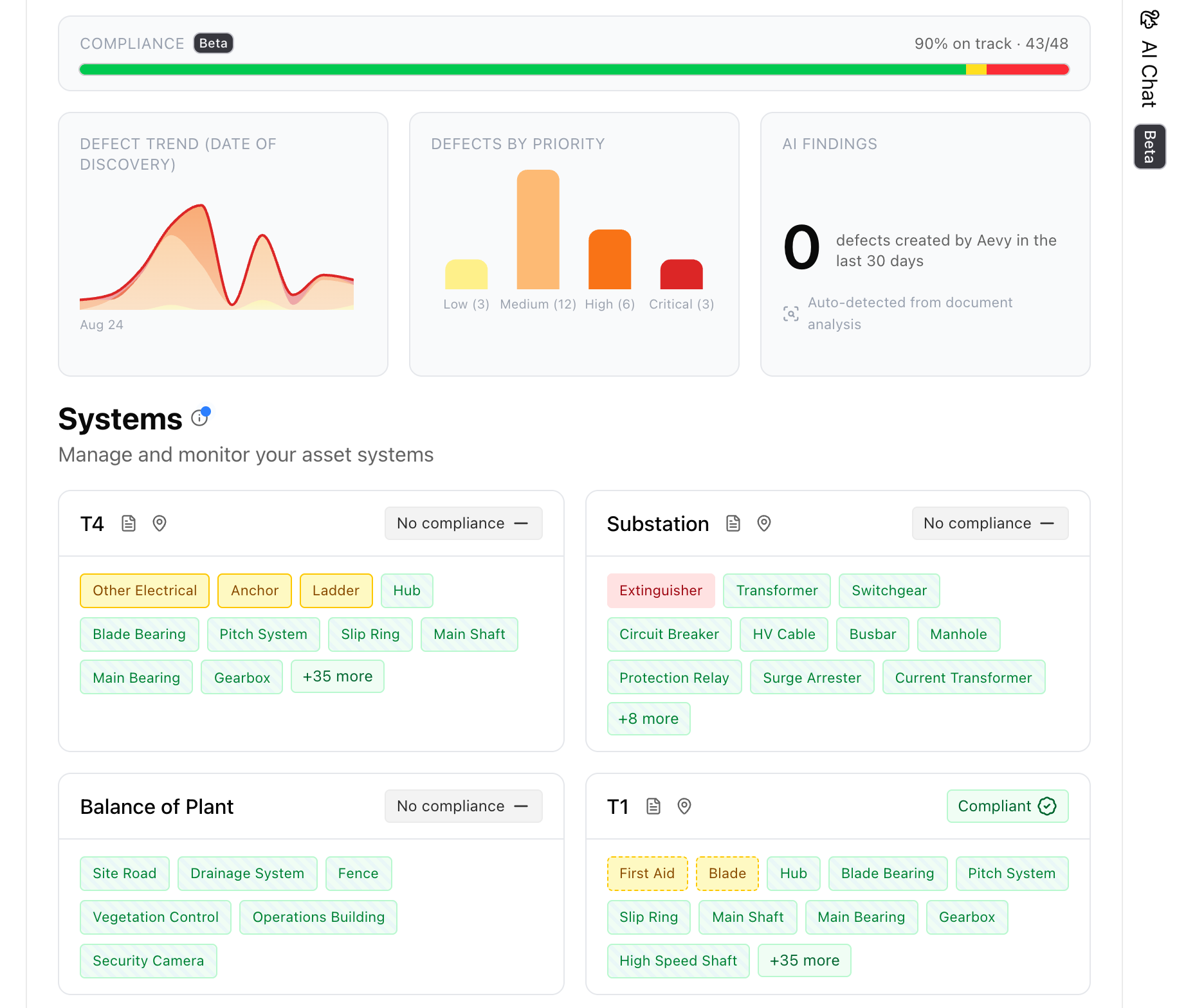
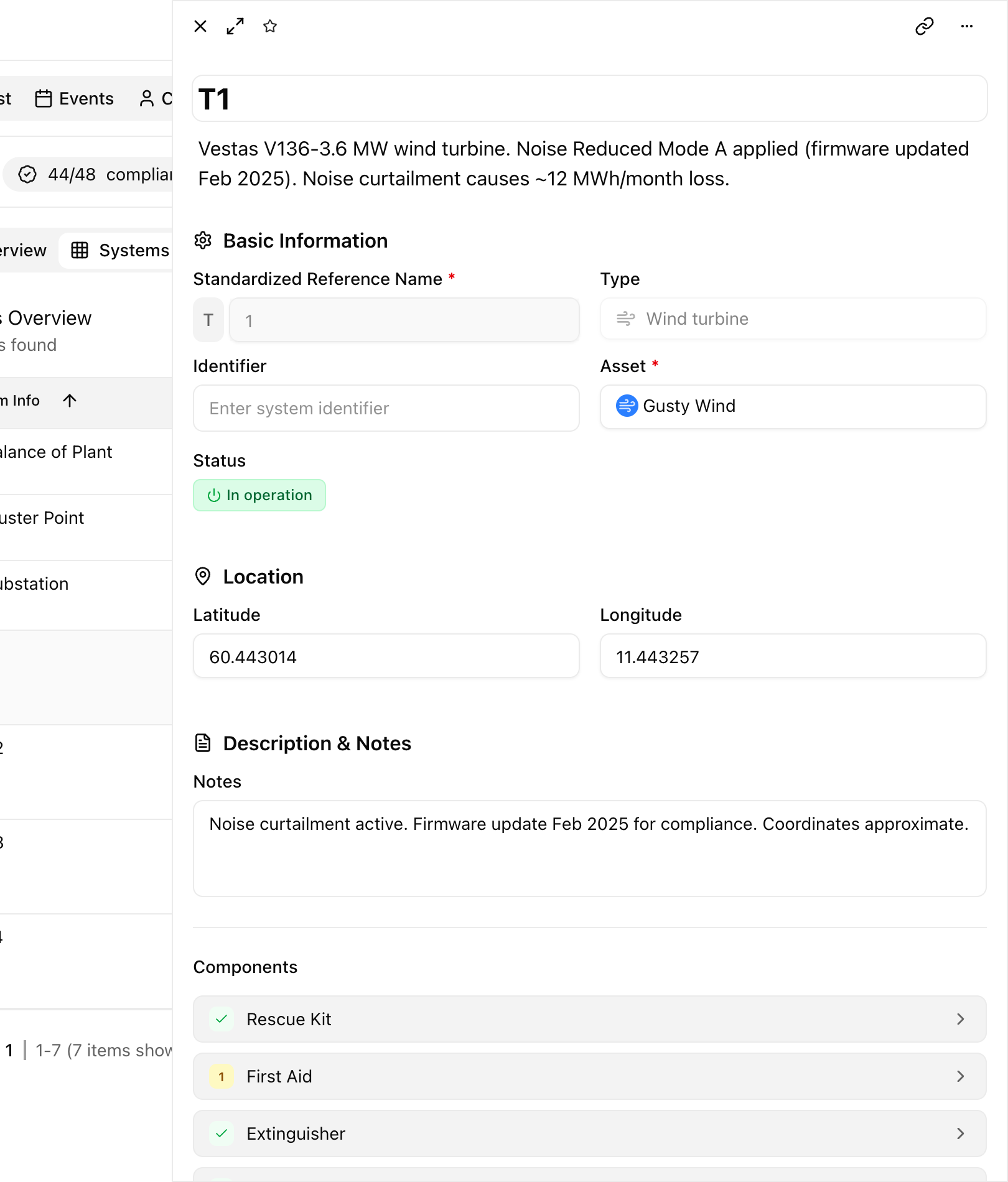
On a wind farm, a system is a turbine, the substation, or the balance of plant, and a component is a part inside one: a gearbox, a transformer, a rescue kit.
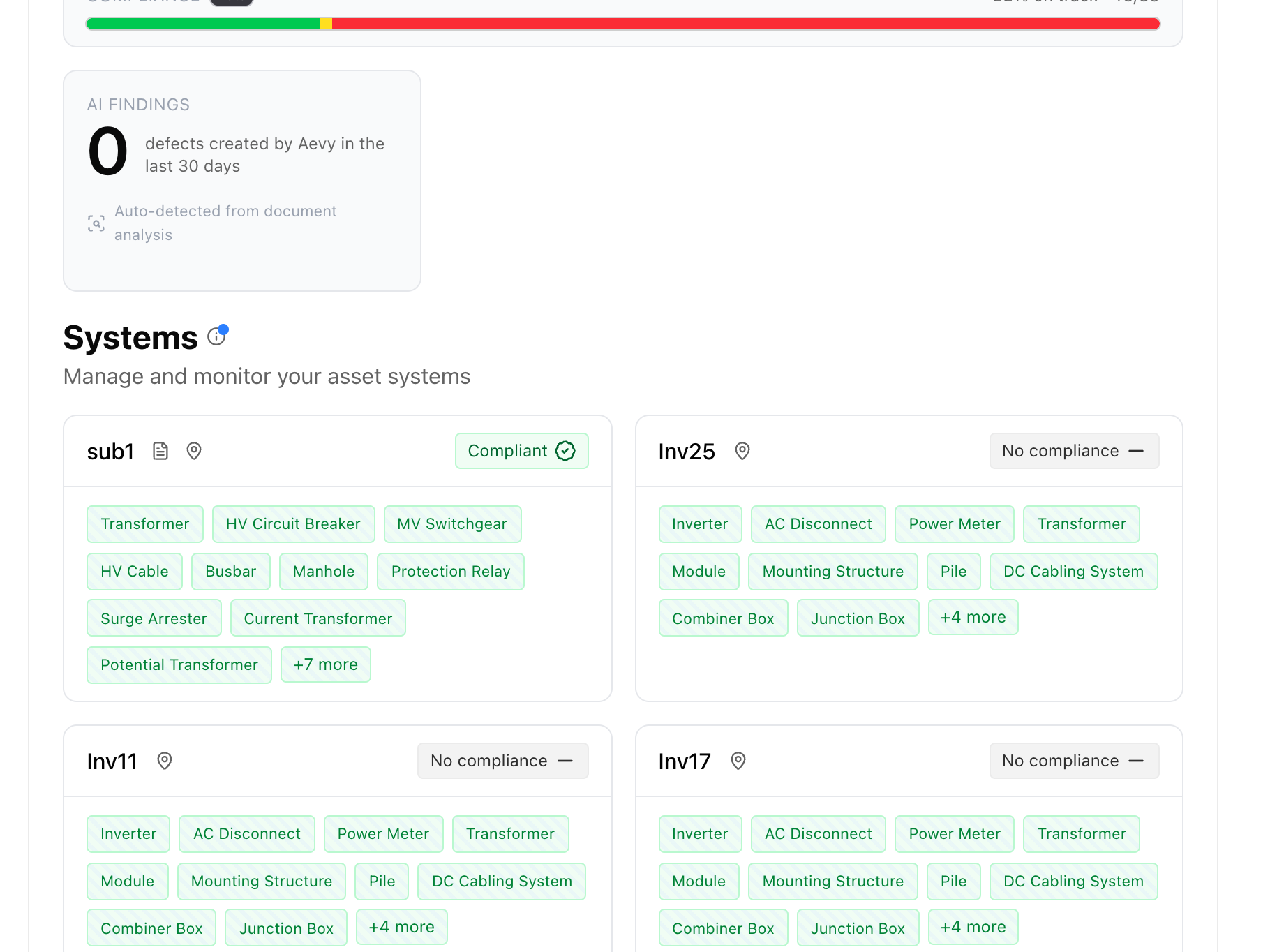
On a solar plant, a system is the substation or an inverter station, and a component is a part inside one: an inverter, a PV module, a combiner box.
Reading the overview
Section titled “Reading the overview”The overview opens on cards, one per system, with the components listed as tags and a compliance state in the corner. Above the cards, a defect trend and a breakdown by priority (low, medium, high, critical) show where the work is, and an AI findings count shows what we flagged from document analysis in the last thirty days.
On a wind farm the cards are the turbines, the substation, and the balance of plant, with parts like the gearbox and transformer as tags inside each one.
On a solar plant the cards are the substation and the inverter stations: for Sunny Solar you see sub1 alongside inverter stations like Inv11, Inv17, and Inv25. The tags are the parts inside each one: an inverter, PV modules, a combiner box, DC cabling, the mounting structure and piles.
The four views
Section titled “The four views”Four tabs sit above the systems, each a different way to read the same equipment:
- Overview. The cards, with components as tags.
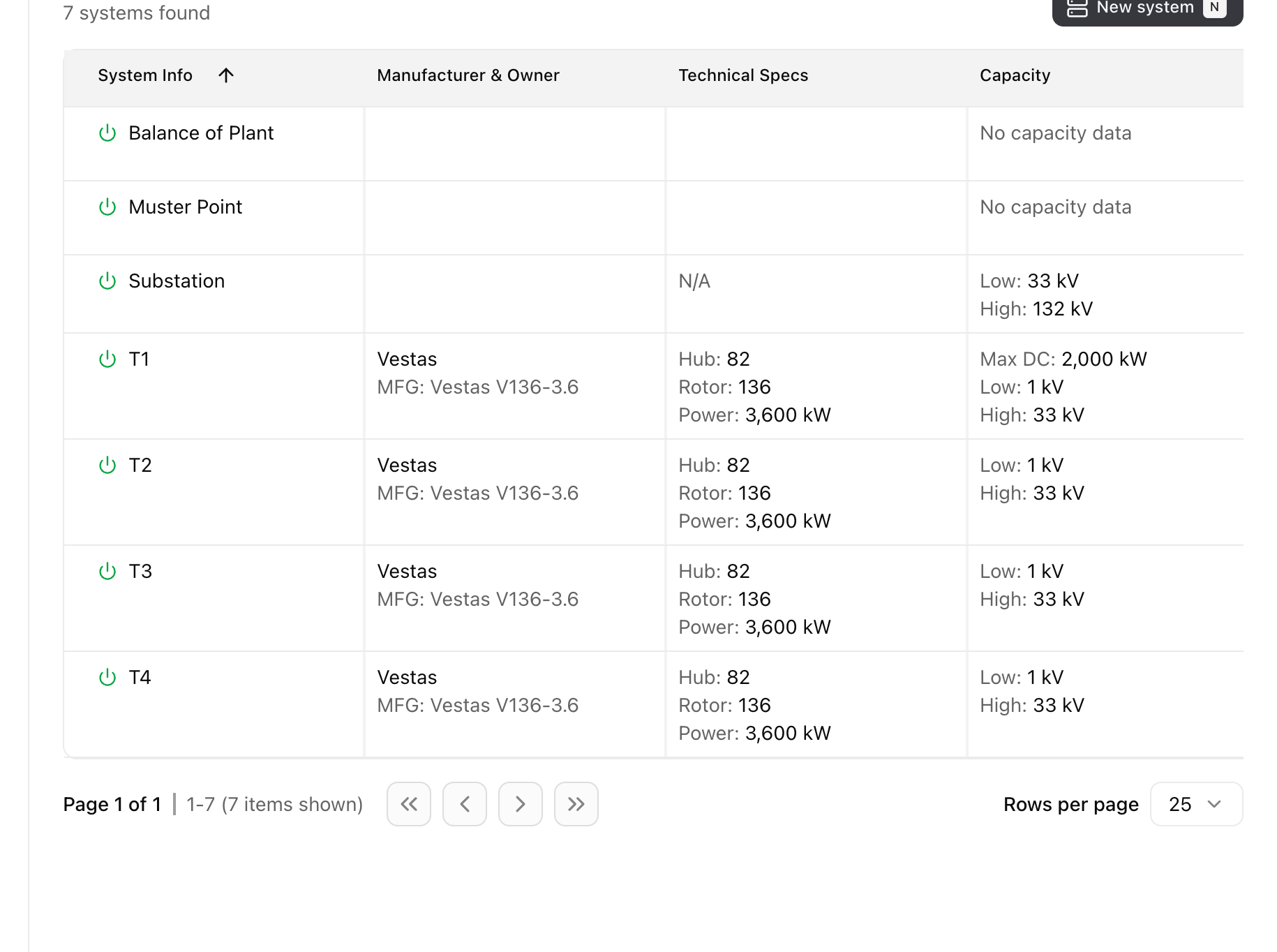
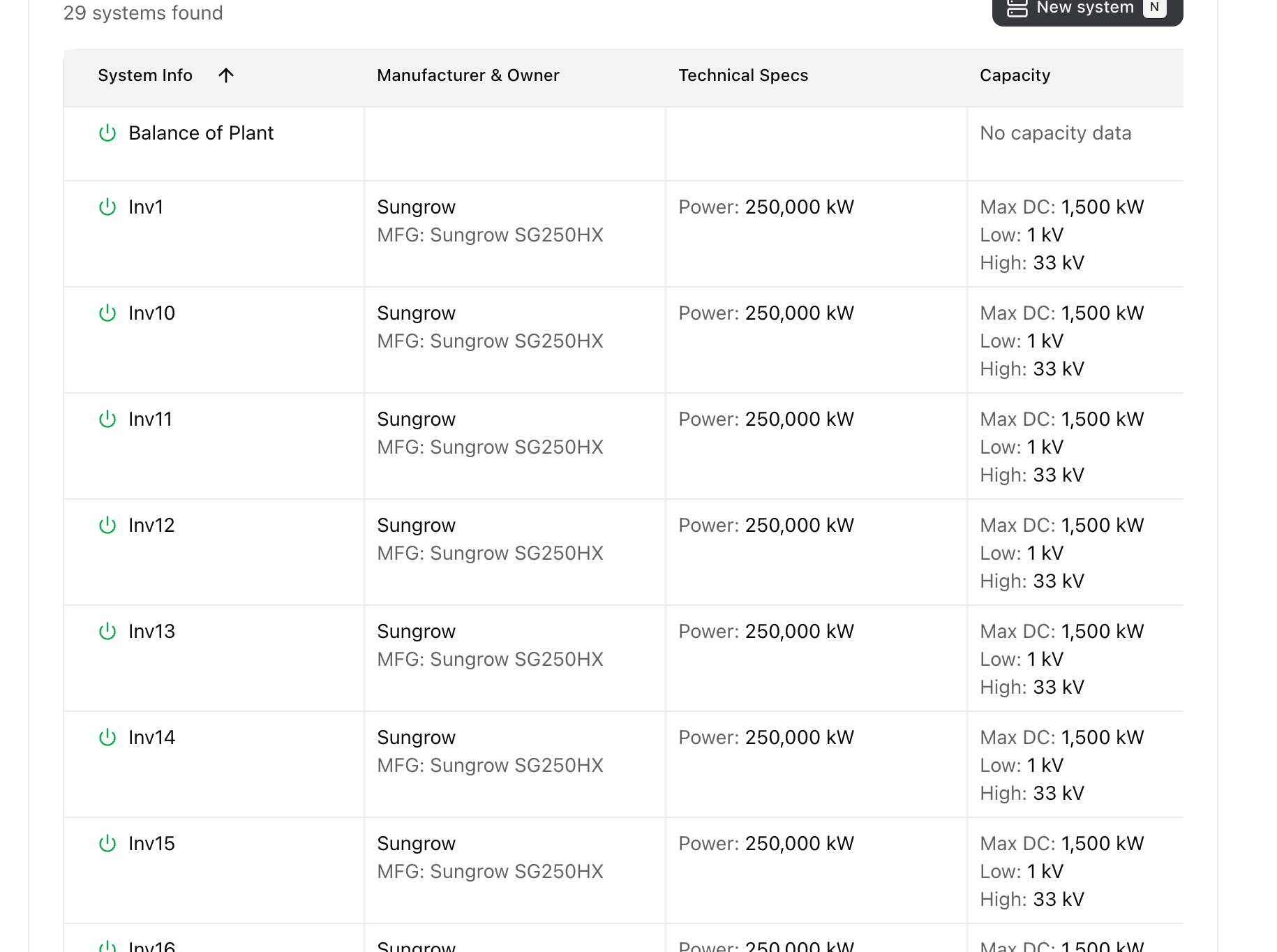
- Systems List. A table with the specifications for the technology: manufacturer and owner, capacity, and operating status, plus hub height and rotor diameter on a wind farm or AC and DC voltage on a solar plant.
- Systems Map. The systems placed on a map, where they have coordinates.
- Statutory Inspections. Inspections rolled up from component to system.
Inside a system
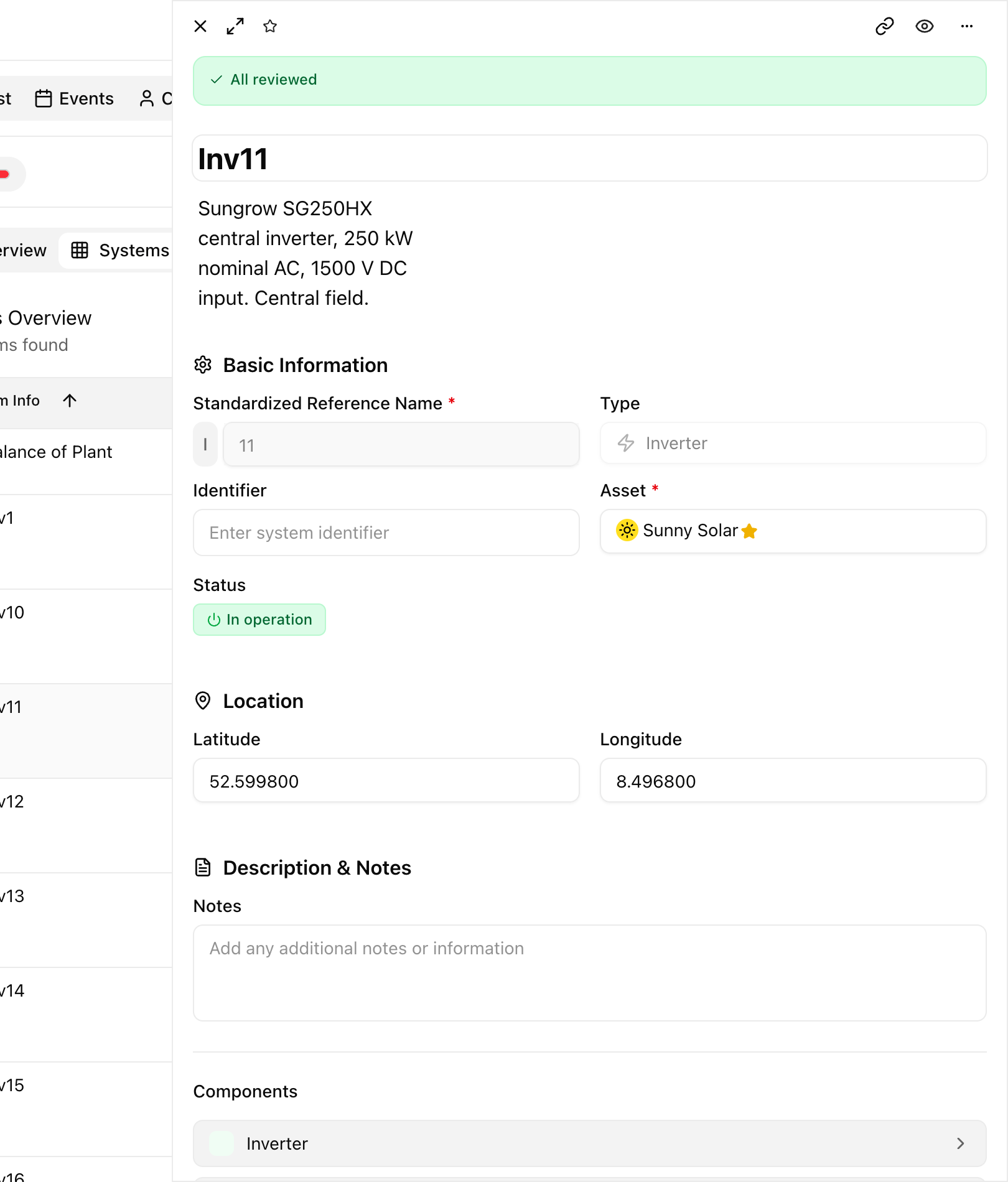
Section titled “Inside a system”Open a system to see its full record: its standardized reference, type, status, location, and notes, and beneath that the components it holds. Each component is a step deeper: open one to reach its defects, so you move from the site to the system to the part to the specific issue without losing your place.
For an inverter station like Inv11 the record reads plainly, a Sungrow SG250HX central inverter at 250 kW AC and 1500 V DC input, in operation, with its inverter, modules, and combiner box listed below.
Adding a system
Section titled “Adding a system”Use New system on the systems view to create one and fill in its reference, type, and status. Components are mapped to systems when your asset is set up, so the parts already sit under the right system when you arrive; the views above are how you read and track them, not where you wire them together.