Filtering tables
Narrow any list to exactly what you need, then save the cut or share it as a link.
One filter bar, everywhere
Section titled “One filter bar, everywhere”Documents, Reminders, Punchlist, Events, Contacts, Systems: every table in Aevy shares the same filter bar. Learn it once and it works the same on all of them. A filter is a rule on one column, and you can stack as many as you need.
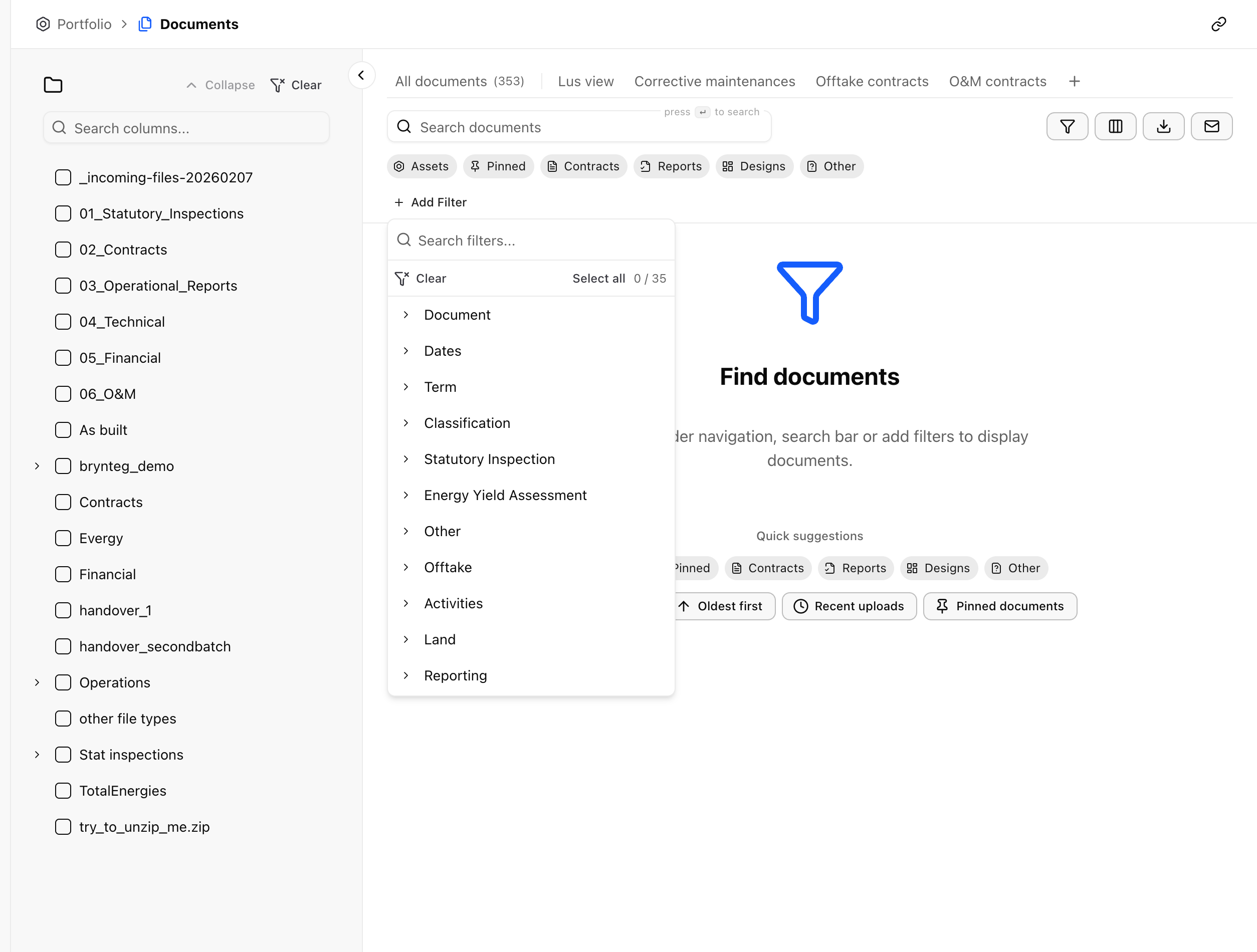
Adding a filter
Section titled “Adding a filter”Click Add Filter, then pick the column to filter on. A filter appears as a chip in the bar, ready for you to set its value. Add another for a second rule.
The three parts of a filter
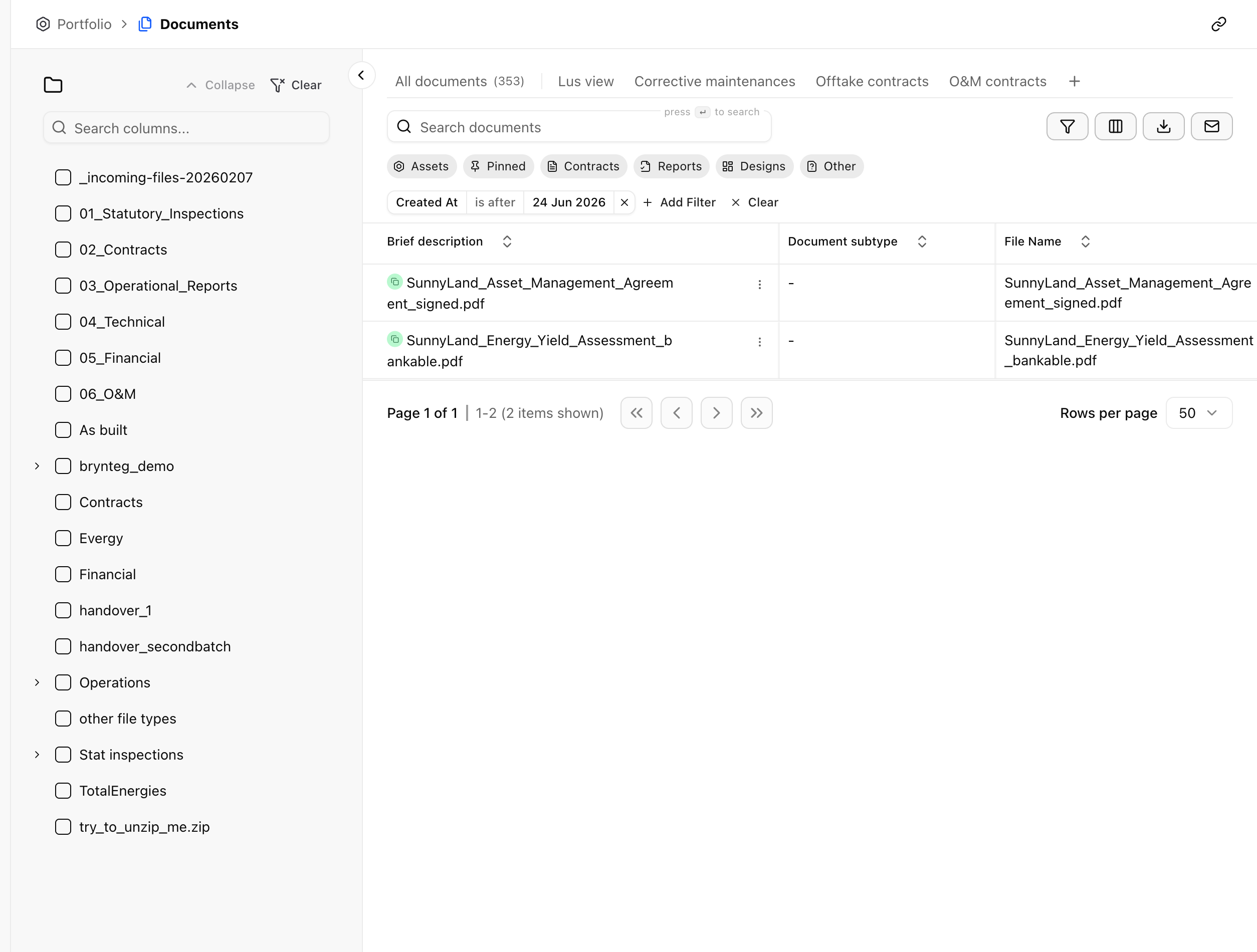
Section titled “The three parts of a filter”Every filter chip reads left to right as field, operator, value, and each part is its own click:
- Field. The column the rule applies to, for example Created At.
- Operator. How to compare, for example is after.
- Value. What to compare against, for example 24 Jun 2026.
Click any part to change it. The small cross at the end of the chip removes that filter and leaves the rest in place.
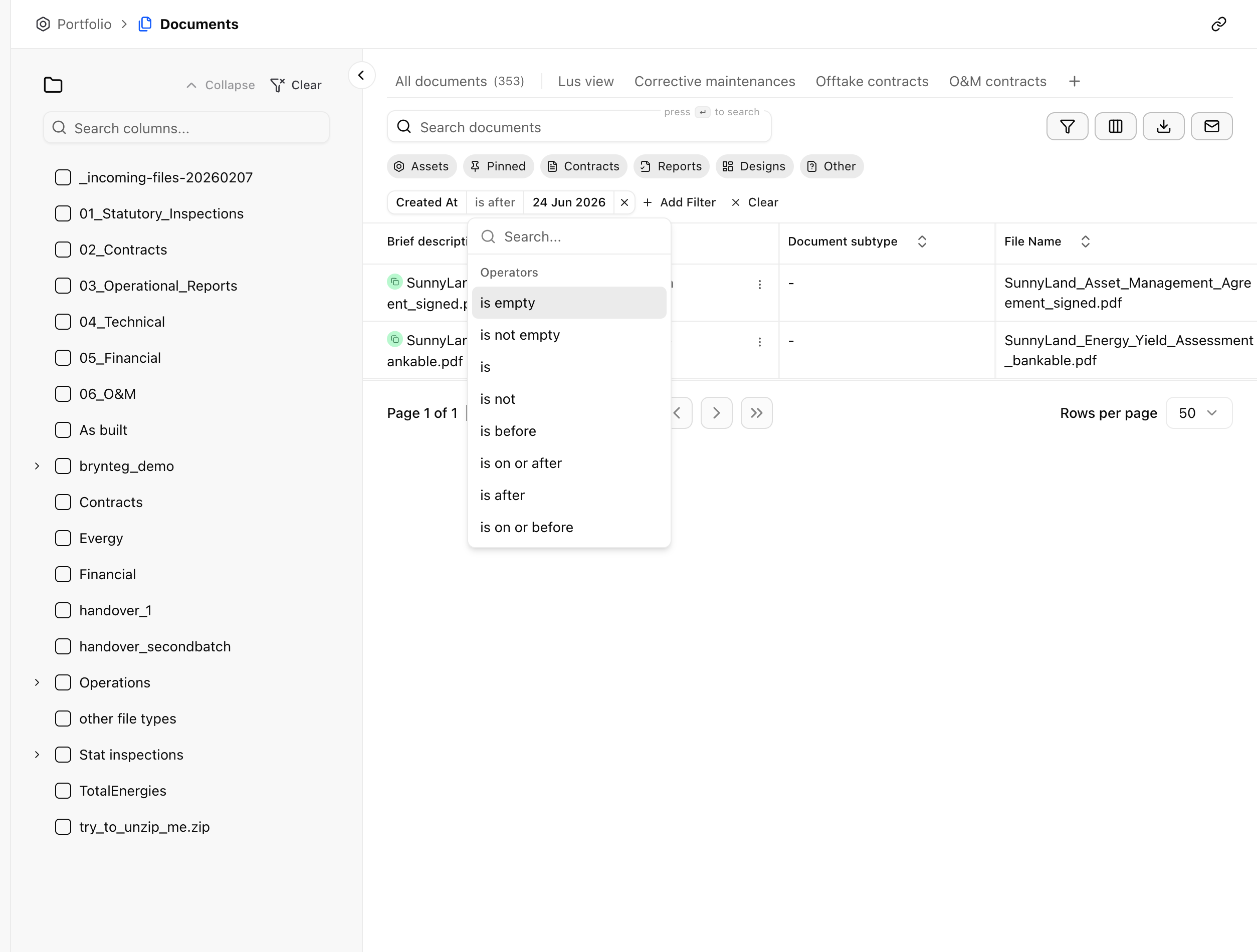
Operators follow the field
Section titled “Operators follow the field”The operators you see depend on what kind of column it is, so the choices always make sense for the data:
- Text (a name, a description): contains, does not contain, starts with, ends with, is empty, is not empty.
- Dates: is, is before, is after, is on or before, is on or after, is between.
- Options (a status, a type): is, is not, is any of, is none of.
Combining and clearing
Section titled “Combining and clearing”Filters combine with and: a row shows only if it matches every filter in the bar. To start over, Clear removes all of them at once. For the most common cuts, the quick-filter chips above the bar apply a ready-made filter in one click.
Saving and sharing a view
Section titled “Saving and sharing a view”Your filters, along with the sort, the columns, and the search, live in the page address. Copy the link and whoever opens it lands on the same view, already filtered. When a cut is one you will come back to, save it as a view so it sits along the top of the table for next time.